Beyond the Abacus: How AMAkids Developed a Modern Learning System
Place an abacus on a classroom desk, and it may look much like one used by earlier generations. The beads still represent numbers. Children still learn to perform operations and work with an imagined abacus during mental calculation.
But the instrument tells only part of the story.
At AMAkids, the development work has focused on the learning experience around it: how teachers explain, how children practise, how materials connect and how difficulties become visible.
The result is an approach that brings abacus-based calculation together with teaching resources, digital practice, games and teacher preparation.
A familiar instrument can support a different learning experience
Think about how transport has developed. A carriage, a car and an aircraft all help people reach a destination, but their design changes how the journey works.
The analogy has a useful place in education. A familiar objective can remain while the tools and organisation around it develop substantially.
For AMAkids, that does not mean claiming that adding technology makes every child learn faster. It means looking beyond the counting instrument and asking how the whole learning process can be improved.
What happens between lessons? How does the teacher know where a child struggles? What helps practice remain engaging? How can another teacher learn to deliver the programme?
Those questions shaped the development of the AMAkids approach.
The teaching approach was reworked alongside the resources
AMAkids founder Volodymyr Fedyay worked with methodological specialists to develop the programme and its teaching materials.
The work extended beyond presenting familiar calculations on a screen. It addressed how children encounter the subject, practise it and receive support.
One example is the relationship between physical and mental calculation. In the AMAkids approach, both are introduced from the early lessons, using tasks appropriate to the learner. Children do not have to spend a long initial period working exclusively with physical beads before encountering mental practice.
Lessons also include changes of activity, with explanations, practical work and opportunities to participate in different ways. The teacher uses the programme’s resources while responding to the needs of the group.
The aim is to give the lesson a purposeful structure that children can engage with.
The workbook and platform are connected parts of learning
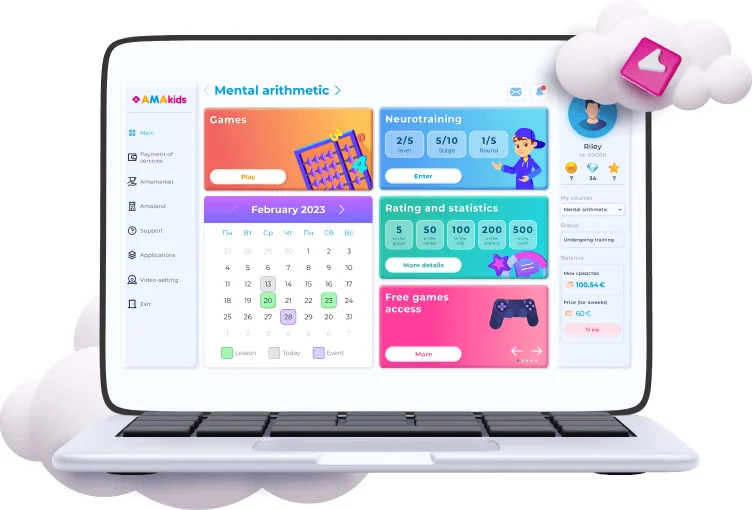
Printed materials remain part of AMAkids.
A workbook provides a place for structured tasks and written practice. The physical abacus gives children a visible tool for working with numbers. Digital activities introduce further ways to practise and participate.
Their value comes from how they fit together.
A child might work on a topic with the teacher, complete related workbook tasks and continue with assigned digital practice. The activities use different formats while supporting the learning being developed.
This connection matters. A collection of attractive games is not automatically an educational programme. Teachers need to understand which activities serve the current learning objective and when to use them.
How the two formats work together in a course: workbooks and digital practice in mental arithmetic.
Home practice gives the teacher more to work with
Learning continues between classes, and the teacher benefits from knowing what happens during that time.
The AMAkids platform provides information about activity, task completion and errors. These observations can help the teacher identify something worth investigating before the next lesson.
For example, a child may participate confidently in class but repeatedly struggle with a particular type of assigned task at home. That gives the teacher a reason to check understanding and discuss the difficulty.
The information does not explain the cause by itself. The teacher still needs to find out whether the child misunderstood an operation, needs further practice or encountered another obstacle.
Technology helps make the question visible. Pedagogical judgement guides the response.
Games create more ways to participate
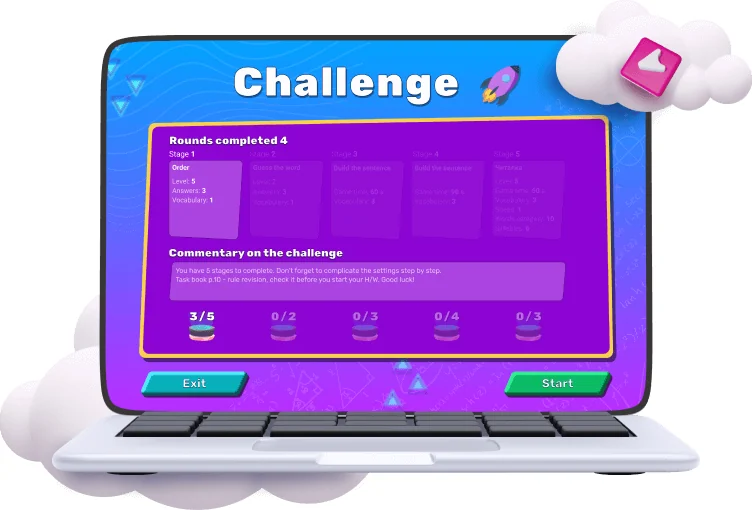
Repeated practice can become monotonous when every activity feels the same.
AMAkids includes game formats, quests, rewards and opportunities for competition. These provide different ways for children to take part and encounter challenges.
Competition is one option. Children can also work through individual activities and achievements without making a contest the centre of their experience.
The teacher’s task is to keep the educational purpose clear. Completing an activity, receiving a reward and understanding a calculation are related parts of the experience, but they are not interchangeable measures.
An engaging format gives children a reason to participate. The teaching still needs to help them learn.
Teacher preparation supports the whole system
A platform cannot deliver a thoughtful explanation on behalf of an unprepared teacher.
AMAkids teacher preparation covers the methodology, physical and mental calculation, learning resources, platform use and practice teaching. It also includes preparation for questions from parents.
That connection is important for a centre introducing the programme. The teacher needs to understand how the resources work together and how to respond when a child needs something explained differently.
For the owner, this provides a defined programme to prepare the team around. It also creates a basis for discussing lesson preparation and teaching quality.
The centre remains responsible for recruitment, everyday organisation and communication with families.
What the difference means when choosing a programme
When parents compare mental arithmetic courses, the abacus may look similar across several classrooms. A more useful comparison considers what happens around it.
Ask to see how a lesson connects with home practice. Find out how the teacher reviews difficulties and what children can do when they need support. Look at the materials alongside the explanation of how they are used.
Prospective centre owners can take the same approach. Examine teacher preparation, sample resources and the relationship between classroom work and the platform.
These details reveal more than a claim that a programme is traditional or modern.
AMAkids builds on abacus-based calculation through a broader learning system. Its development lies in bringing teaching, materials, practice and feedback together—and giving each a clear role in the child’s experience.
To learn about the programme, explore mental arithmetic at AMAkids. For information about bringing it to your own centre or market, contact the AMAkids franchise team.
Explore Mental Arithmetic at AMAkids →Leave a request for a free consultation
Get a consultation