Workbooks and Digital Practice in Mental Arithmetic: How They Work Together
A parent opens the homework assignment and asks: “If the exercises are available on the platform, why does my child still need a workbook?”
Another family asks the opposite question: “We already have the book and an abacus. What does the digital practice add?”
Both questions are reasonable. Families need to understand why the course uses several resources and how those resources connect.
In a teacher-led mental arithmetic program, the workbook and digital activities support a shared learning plan. The teacher brings them together, reviews the child’s work, and decides what needs attention next.
The Workbook Gives Practice a Clear Structure
A workbook provides a defined set of activities that the teacher can connect to the topic being studied.
The student has a visible assignment to work through. The teacher can review what was attempted, where errors appeared, and what may need further explanation.
Depending on the task, the child may use a physical abacus or another form of practice specified by the program. A printed exercise does not necessarily mean that every calculation must be worked out on paper.
In the AMAkids approach described by Volodymyr, workbook practice remains an important part of learning. Digital activities supplement that work rather than making the printed materials unnecessary.
The useful question is whether the child understands the assignment and is practicing the intended skill. A completed page alone does not answer that question.
Digital Practice Adds Another View of the Work
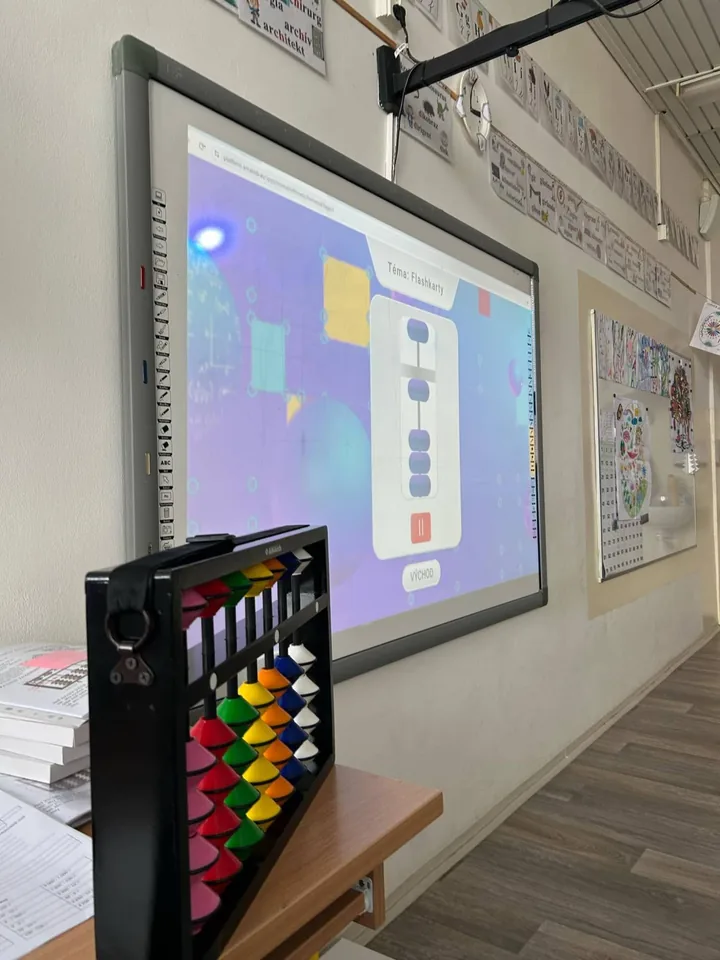
Digital activities can provide repeated practice in an interactive format and make information about completed work available to the teacher.
Within the features available for the selected program, the teacher may review activity, errors, completion, and other relevant performance information.
This can help draw attention to a change. A student who previously practiced regularly may stop. Another may complete assignments but repeatedly struggle with a particular type of task.
Those observations give the teacher a reason to investigate. They do not establish the cause automatically.
A difficulty could involve understanding, task selection, instructions, access, or the circumstances in which the child is practicing. The teacher needs to connect the record with what they see in lessons and hear from the family.
Connect Both Resources to the Same Learning Goal
Homework becomes confusing when families receive a workbook page and a digital assignment without understanding how they relate.
The teacher should be able to explain what the child is practicing and which resources belong to that work.
That does not require sharing internal lesson plans or technical exercise settings. A short explanation can establish the connection: the assignments relate to the material studied with the teacher and provide opportunities to practice it.
The tasks do not have to be identical. Different activities can contribute to the same learning goal.
Before assigning work, check that the workbook material and digital tasks are appropriate to the student’s current stage. If they appear disconnected, the child may spend time completing activities without understanding their purpose.
Review Work Across Formats
A correct digital answer and a completed workbook exercise each provide useful information. Neither gives the teacher the whole picture.
Consider a student who performs well in familiar workbook tasks but struggles during digital practice. Before changing the workload, check whether the instructions, task demands, and practice conditions are comparable.
The reverse can happen, too. A child may complete digital activities while leaving workbook assignments unfinished. The teacher needs to understand whether the issue is organization, uncertainty about the task, or something else.
These are situations to investigate, not automatic signs that one format is unsuitable.
Review relevant work alongside classroom observation. Ask the child to explain or demonstrate where appropriate. This helps the teacher distinguish a misunderstanding from a practical difficulty.
Keep the Teacher Responsible for the Next Step
Technology can record work and make patterns easier to notice. Teaching decisions still require professional judgment.
When errors recur, the response should begin with finding out what the student has not yet understood. More exercises are not always the first useful step.
The teacher may need to revisit an explanation, clarify instructions, or seek methodological guidance. Any adjustment should follow the program and the teacher’s preparation.
Moving forward simply because an assignment has been completed can leave an earlier difficulty unresolved. Repeating the same task without investigating can also become frustrating.
The purpose of reviewing practice is to choose an appropriate next step.
Explain Home Practice Clearly to Families
Parents should not have to reconstruct the assignment from several messages.
Give them a clear account of what the child needs to do and where to find it.
| Question | What the teacher should clarify |
|---|---|
| What is assigned? | The relevant workbook work and digital activities |
| What materials are needed? | The resources required for those particular tasks |
| How should we approach the work? | Guidance appropriate to the course and student |
| What help should an adult provide? | How to support the routine without completing the task |
| What if something is unclear? | Whom to contact and how to describe the difficulty |
| How will the work be reviewed? | What the teacher checks and how questions are followed up |
Practice guidance should reflect the child’s age, course, and current needs. Avoid presenting one fixed duration as suitable for every learner.
If the work regularly takes much longer than expected or leads to repeated frustration, ask the family to tell the teacher. That is useful information for reviewing the assignment.
Help Parents Support the Routine
An adult can help a child find the materials, establish a suitable time, and remember what has been assigned.
They should also know when to stop trying to explain something and contact the teacher.
If parents provide answers or complete tasks to keep the record looking successful, the teacher loses information about the child’s understanding. Equally, leaving a child to struggle repeatedly without reporting the difficulty does not help the teacher respond.
Agree on a practical way to communicate. The family might identify a workbook exercise or describe where a digital task became unclear. The teacher can then review the specific issue.
Parents do not need to become instructors in the method to make this support valuable.
Treat Rewards as Part of the Experience
Games, achievements, and other motivational features can give children reasons to return to digital practice.
The teacher still needs to keep the learning purpose clear. Finishing an activity or receiving a reward should not be treated as complete evidence that a topic has been mastered.
Similarly, workbook practice should have a clear place in the course rather than appearing to be an unrelated requirement before the enjoyable activities begin.
Explain both resources as parts of the child’s learning. Recognize effort and specific progress across them.
Students may respond differently to competitive and individual activities. Where the program offers choices, use them within its guidance without assuming that every child needs the same motivational approach.
What Center Owners Should Check
For a center owner, a package containing books and a platform is only the starting point. Teachers need preparation in using the resources together.
Ask whether the team can select appropriate assignments, explain them to families, review completed work, and respond when difficulties appear.
Our guide to preparing a mental arithmetic teacher for their first group looks at this wider preparation.
When evaluating an educational partnership, request examples that show how the learning materials connect. A demonstration of an attractive game is useful, but you also need to understand its place in the course.
The practical value comes from a coherent program: teaching, appropriate practice, review, and an informed next step.
Considering mental arithmetic for your learning center or school? Explore AMAkids partnership options and discuss the teaching materials, digital practice, and preparation available for your team.
Explore AMAkids Partnership Models →Considering an AMAkids franchise? Get the partnership presentation: formats, programs and launch support.
Get the presentation